Setting up a smart home can make your life more convenient, energy-efficient, and secure. With the right gadgets and a few key steps, you can transform your living space into a modern, tech-savvy home. In this guide, we’ll walk you through the essential smart home gadgets and provide tips on how to set everything up in 2025.
1. What is a Smart Home?
A smart home is a home that uses internet-connected devices to automate and control various aspects of the household, such as lighting, temperature, security, and entertainment. With the help of smart home hubs or voice assistants like Amazon’s Alexa, Google Assistant, or Apple’s Siri, you can control devices from your smartphone, tablet, or even with voice commands.
Setting up a smart home allows for more convenience, efficiency, and security. Whether you want to control your lights while you’re away or monitor your front door remotely, a smart home offers endless possibilities.
2. Essential Smart Home Gadgets
Here’s a list of the essential gadgets you’ll need to get started with your smart home setup:
1. Smart Speakers and Voice Assistants
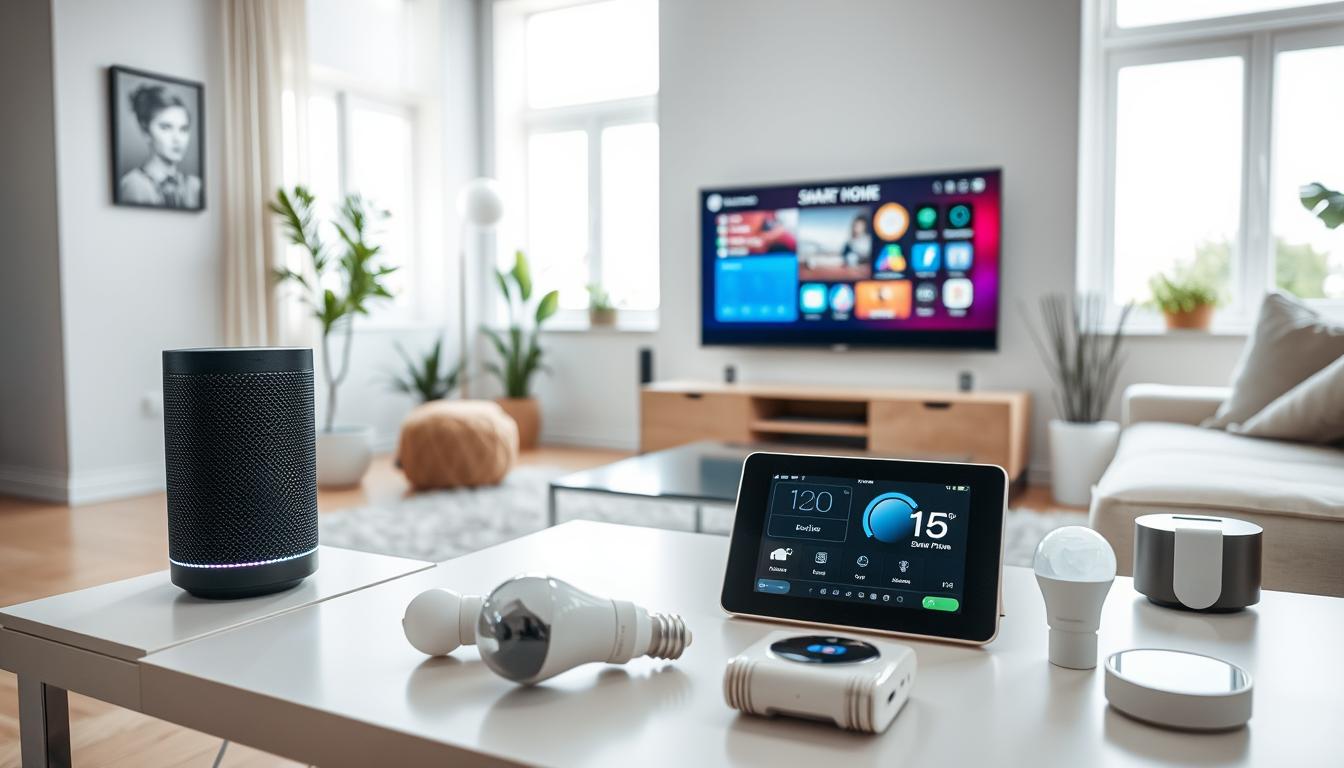
A smart speaker (like the Amazon Echo or Google Nest Audio) is the foundation of many smart homes. These devices come equipped with built-in voice assistants that allow you to control other smart gadgets using voice commands. You can ask your smart speaker to turn on the lights, play music, control your thermostat, or even order groceries.
- Amazon Echo (Alexa)
- Google Nest Audio (Google Assistant)
- Apple HomePod Mini (Siri)
2. Smart Lights
Gone are the days of flipping light switches. Smart bulbs allow you to control the lighting in your home with your smartphone, voice assistant, or even schedule them to turn on or off automatically.
- Philips Hue bulbs are one of the most popular options, offering adjustable colors and brightness.
- LIFX bulbs are another great choice, providing a wide range of colors and easy setup.
Smart lights can enhance the ambiance in your home and save energy by adjusting the brightness according to your needs.
3. Smart Thermostat
A smart thermostat, like the Nest Thermostat or Ecobee, gives you control over your home’s temperature from anywhere. These devices learn your schedule, so they can automatically adjust the temperature to save energy when you’re not home. Some models also provide detailed insights into your energy usage.
- Nest Learning Thermostat learns your routine and adjusts accordingly.
- Ecobee SmartThermostat includes a built-in Alexa speaker and multiple room sensors for even more control.
A smart thermostat not only improves comfort but also reduces energy costs over time.
4. Smart Security Cameras and Doorbell
Security is a top priority in any smart home. Smart cameras and video doorbells allow you to monitor your property remotely, receive alerts if there’s unusual activity, and communicate with visitors even when you’re not home.
- Ring Video Doorbell is one of the most popular choices, providing video surveillance and two-way audio.
- Nest Cam and Arlo offer high-definition video and motion detection.
These devices offer peace of mind and help protect your home from intruders.
5. Smart Plugs and Switches
Smart plugs and switches allow you to turn ordinary appliances into smart ones. With a smart plug, you can control devices like lamps, coffee makers, or fans with your voice or smartphone.
- TP-Link Kasa Smart Plug is an affordable option for controlling appliances remotely.
- Lutron Caseta Wireless Smart Lighting Kit allows you to turn lights on or off from your phone or voice assistant.
These devices are easy to set up and add automation to even the most basic gadgets in your home.
3. Tips for Setting Up Your Smart Home
Now that you have the essential gadgets, here are some tips for setting up your smart home:
1. Start with a Hub or Ecosystem
Choose a smart home hub (Amazon Alexa, Google Assistant, or Apple HomeKit) that supports a wide range of devices. Starting with a central ecosystem allows for better compatibility between gadgets and a more streamlined user experience. For example, if you already have an Amazon Echo, adding Alexa-compatible devices will be easier.
2. Plan Your Network
Since all your devices will be connected to the internet, a strong Wi-Fi network is essential. Invest in a good router with strong coverage throughout your home. For larger homes, consider a mesh Wi-Fi system (like Eero or Google Nest Wi-Fi) to ensure seamless connectivity for all your devices.
3. Prioritize Security
While convenience is important, security is just as critical. Make sure to set up two-factor authentication for your smart home accounts and update device firmware regularly to protect against potential vulnerabilities. Use encrypted cameras and smart locks to enhance security further.
4. Start Simple and Scale Up
You don’t have to buy everything at once. Start with a few essential devices, like a smart speaker and a couple of smart bulbs, and then expand from there. As you become more comfortable with the system, you can add more devices, like a thermostat, camera, or smart plugs, to further automate your home.
4. Conclusion
Setting up a smart home in 2025 can significantly improve your convenience, energy efficiency, and security. With essential gadgets like smart speakers, lights, thermostats, and security cameras, you can create a home that responds to your needs.
Remember to start with the basics, invest in a reliable network, and prioritize security as you build your smart home. Whether you’re just getting started or looking to upgrade your current setup, these gadgets and tips will help you create a modern, connected home that enhances your daily life.